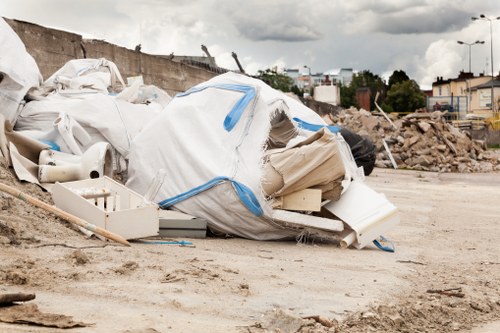
Health and Safety Policy for Office Clearance Woolwich
This Health and Safety Policy outlines the commitments and arrangements for safe working during all office clearance and rubbish removal activities carried out by our team. The policy applies to every task across our service area and covers clearance of offices, light commercial spaces and associated rubbish collection. Our aim is to reduce risk, protect employees, contractors and clients, and ensure compliance with good industry practice for waste and clearance operations.
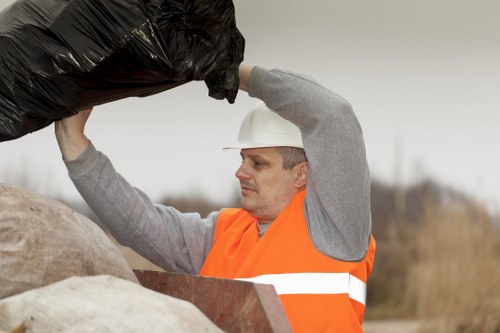 All staff, supervisors and subcontractors engaged in Woolwich office clearance and related clearance services must understand their duties. Managers have the primary responsibility to implement control measures and ensure records are maintained. Employees are required to follow safe systems of work, report hazards, and participate in training. This document sets out roles, responsibilities and operational standards for safe office and commercial clearance.
Scope, Responsibilities and Training
The scope covers:
- Planned office clearance jobs, single-room removals and bulk rubbish collection;
- Temporary storage, segregation and transfer of waste materials;
- Use of vehicles, lifting equipment and hand tools during clearance;
- Coordination with client site rules and contractors.
 Training is mandatory for staff involved in clearance and rubbish disposal. Training topics include manual handling, use of PPE (personal protective equipment), safe loading of vehicles, identification of hazardous items (e.g. e-waste, sharps), and spill control. Records of competency and refresher training will be retained and reviewed periodically to ensure fitness to operate safely on job sites.
Risk Assessment and Control Measures
Before every office clearance or rubbish removal activity, a suitable and sufficient risk assessment will be completed. The assessment will consider access, trip hazards, awkward or heavy items, presence of hazardous materials and vehicle routing. Control measures may include safe manual handling techniques, mechanical aids, signage, traffic management and use of appropriate containment for waste materials.
The following control measures will be implemented as required:
- PPE: gloves, safety footwear, high-visibility clothing and eye protection;
- Mechanical aids: trolleys, sack trucks and lifting straps to reduce manual handling;
- Segregation of waste: separate reusable goods, recyclables and hazardous items;
- Safe vehicle loading procedures and securement of loads to prevent shifting in transit.
Emergency procedures are an integral part of the policy. All staff must know the process for reporting incidents, near misses and injuries. First aid provisions, fire extinguisher locations and emergency assembly points (as applicable on client sites) will be communicated prior to work commencing. Incident records will be investigated promptly to identify root causes and to implement corrective actions.
We maintain a clear procedure for handling hazardous or unknown items discovered during a commercial clearance: stop work, isolate the item, notify the supervisor and follow agreed disposal or specialist removal routes. This reduces risk to personnel and protects the environment.
Accident reporting follows a consistent standard: immediate first aid for the injured, notification to the line manager, documentation of the event and completion of a review to prevent recurrence. Lessons learned are integrated into toolbox talks and training sessions.
Contractor and visitor safety is managed through pre-qualification checks, site inductions and supervision where required. Subcontractors carrying out waste handling must meet our safety standards and provide evidence of training, insurance and their own risk assessments. Vehicle safety rules require daily checks, secure loading and adherence to road safety regulations during transit to disposal facilities.
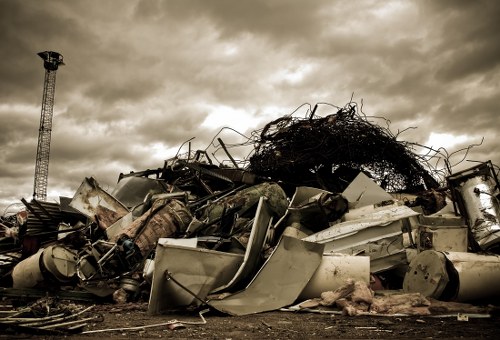 Environmental considerations are essential. Our clearance operations prioritise reuse and recycling to minimise landfill. Waste handling procedures ensure proper segregation of recyclable materials, secure containment of hazardous items and correct documentation for transfer to licensed treatment facilities. This supports an environmentally responsible rubbish collection and removal service across the area.
Monitoring and continuous improvement are maintained through routine site audits, health and safety inspections and management reviews. Performance indicators include incident rates, near misses recorded, compliance with PPE use and successful segregation rates. Findings lead to action plans, retraining and updates to operating procedures.
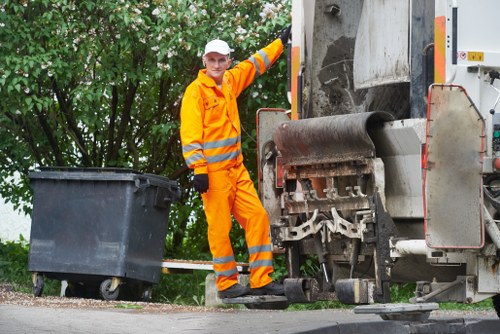 Policy Review and Commitment: This policy will be reviewed at least annually or sooner if there are significant changes to operations, legislation or after a serious incident. Reviews will evaluate the effectiveness of risk controls, training adequacy and operational feedback from teams conducting office clearance and rubbish removal tasks.
All staff are expected to play an active part in maintaining a safe working environment. Supervisors will lead by example and ensure that safety is integrated into everyday decisions. The organisation commits adequate resources to maintain safe equipment, training and workplace standards for all commercial clearance contracts.
Conclusion: By following these principles and procedures we ensure that office clearance, rubbish removal and related clearance services are carried out safely, responsibly and efficiently. Continuous vigilance, proper training and adherence to the measures described here will reduce risks and protect people, property and the environment during every clearance operation.
